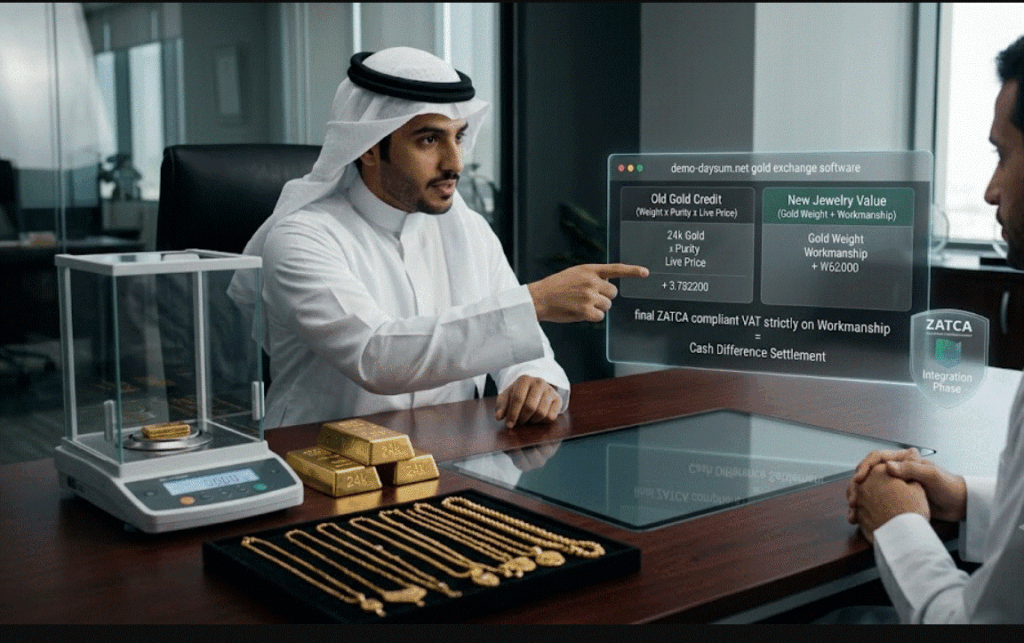
Gold ERP

Golden Inventory System vs. Generic ERPs Why Jewelers Need a Specialized Tool

Golden Inventory System vs. Generic ERPs: Why Jewelers Need a Specialized Tool

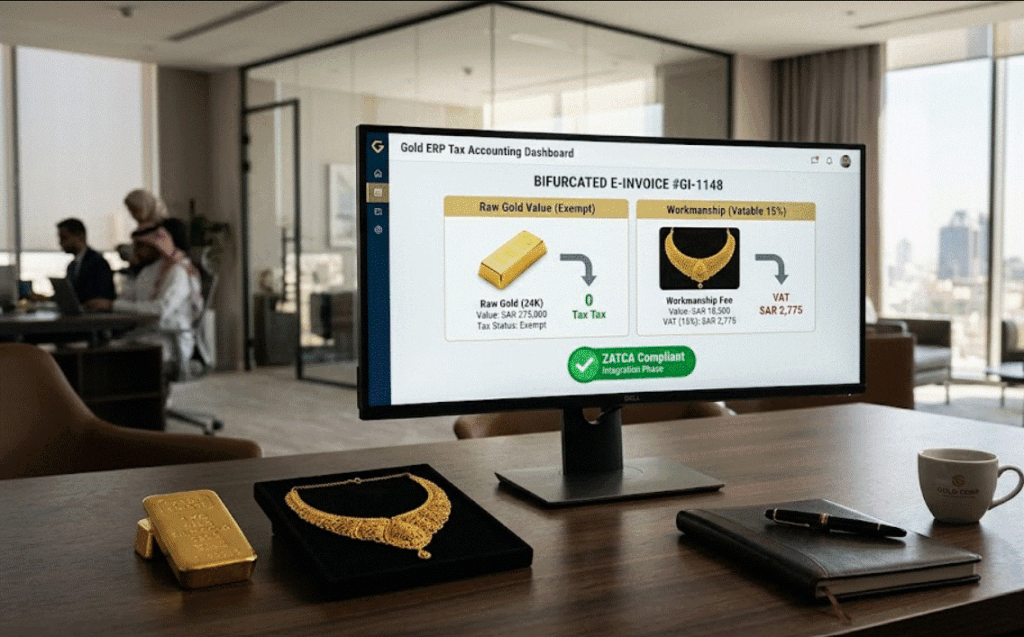
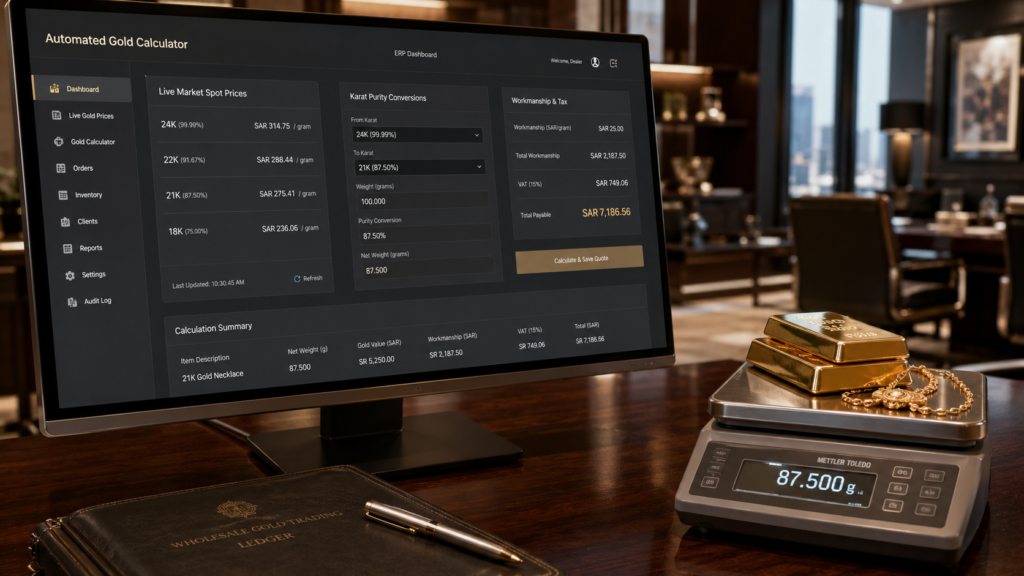
The retail environment across the Kingdom of Saudi Arabia is experiencing a profound and rapid modernization. Driven by sweeping national economic initiatives and a highly educated, tech-savvy consumer base, the days of running a commercial enterprise purely on handwritten ledgers and mental arithmetic are firmly in the past. This digital evolution is especially critical in the jewelry and precious metals market. Unlike standard retail environments, selling gold involves managing massive financial value condensed into incredibly small, highly mobile physical items. As store owners and regional distributors look to upgrade their technological infrastructure to meet these modern demands, they frequently encounter a highly dangerous operational trap: purchasing an off-the-shelf, standard business management program. Many business owners mistakenly assume that software designed to manage a large supermarket, a clothing boutique, or an electronics distributor can simply be slightly adjusted to manage a showroom full of diamonds and bullion. This assumption almost always leads to catastrophic administrative failures, severe financial discrepancies, and a highly frustrating experience for both the sales staff and the customers. The fundamental reality is that the precious metals sector requires uncompromising precision. You are not tracking static boxes on a warehouse shelf; you are tracking exact weights down to the milligram, distinct purity levels that drastically alter the valuation of the metal, and a baseline product value that fluctuates constantly based on international commodity trading. Furthermore, the regulatory environment requires absolute perfection in financial reporting and tax calculations. Navigating the choice between a golden inventory system vs generic erp is the most consequential technological decision your executive team will make, dictating whether your business scales smoothly or collapses under its own administrative weight. Where Standard Business Software Falls Short To fully grasp why generic software fails so spectacularly in a jewelry store, you must dissect the unique anatomy of a gold transaction. A standard Enterprise Resource Planning (ERP) platform is built on a very simple premise: an item has a fixed cost, a static identification number (SKU), and a set retail price. This structure shatters immediately when exposed to the daily realities of the bullion and jewelry trade. Here are the specific, deeply rooted limitations of using generic platforms for your high-value operations: The Complete Absence of Karat Tracking: In a standard system, a metal ring is simply categorized as a piece of jewelry. The software lacks the architectural depth to distinguish between an 18K white gold engagement ring, a 21K traditional bridal necklace, and a 24K pure gold investment bar. Because the system cannot automatically categorize and separate inventory by its elemental purity, business owners are left completely blind to their actual material equity. You cannot accurately calculate your total wealth if your software treats 18K and 24K as identical financial assets. Catastrophic Weight-Based Pricing Issues: Generic software demands a fixed price tag. If you enter a necklace into a standard system at 5,000 Riyals, that price remains frozen until a human manually types in a new number. However, the spot price of gold changes by the minute. When a customer walks in to buy that necklace, the cashier is forced to look up the current global gold rate on their phone, weigh the piece on a scale, manually calculate the raw metal value, add the specific making charge (Masaneya), and then manually override the price in the software. This manual calculation process is agonizingly slow, deeply unprofessional, and guarantees that devastating mathematical errors will occur during busy evening shifts. Missing Industry-Specific Features: Standard platforms do not understand the concept of melting down scrap gold, refining losses, or trading old jewelry for new pieces. When a customer brings in a broken 21K bracelet to offset the cost of a new diamond set, a generic ERP cannot process this simultaneous buy-and-sell transaction. The cashier must perform bizarre workarounds, ringing up negative inventory or creating fake vendor profiles, which completely corrupts the company’s financial database and triggers massive audit red flags. Severe Compliance Gaps and Tax Liabilities: The Saudi government maintains strict regulations regarding electronic invoicing to ensure absolute financial transparency. While a generic ERP might be able to calculate a flat 15% tax on a television set, it often fails to handle the nuanced tax rules surrounding gold exchanges and making charges. Attempting to force a standard system to comply with zatca e invoicing phase 2 regulations usually requires expensive, custom-coded plugins that constantly break. Failing to integrate natively with these national tax portals exposes the business to massive fines, sudden operational shutdowns, and severe reputational damage. Defining a Specialized Platform for Precious Metals Escaping the chaotic limitations of generic software requires investing in a platform that was architected from the very first line of code to speak the highly specific language of jewelers, goldsmiths, and bullion traders. A specialized platform does not force your complex operations to fit into a rigid, predetermined box; instead, it molds itself perfectly around the unique fluid dynamics of your daily trade. What exactly transforms a basic database into a highly tuned ecosystem for your showrooms? Live Synchronization with Global Markets: The beating heart of a specialized platform is its direct, unblinking connection to international gold exchanges. The software constantly pulls the latest spot prices for precious metals. The store manager simply sets the desired local premium and specific making charges for different categories of jewelry. From that moment on, the software automatically recalculates the exact retail price of every single item in the store in real-time. When a cashier scans a barcode, the price displayed on the screen is perfectly accurate for that exact second, protecting your profit margins against sudden market spikes or dips without requiring any manual intervention. Unyielding Precision in Weights and Purity: The system natively understands the difference between grams, ounces, and tolas. It meticulously categorizes every item not just by design or brand, but by its exact karat purity. This allows management to instantly generate reports showing exactly how many kilograms of 21K gold they hold across all branches, instantly converting that weight into a 24K

Read more
Choosing the Right Gold Software 5 Must-Have Features for Jewelers in Saudi Arabia

Choosing the Right Gold Software: 5 Must-Have Features for Jewelers in Saudi Arabia

  The retail landscape across the Kingdom of Saudi Arabia is undergoing a massive, unprecedented digital evolution. For generations, the historic gold markets and independent jewelry boutiques operated on foundational principles of deep personal trust, sharp mental calculations, and handwritten ledgers. However, the sweeping modernization initiatives driving the national economy have fundamentally altered what it takes to run a successful retail business. Today, the pressure on gold retailers to digitize their entire operational framework is immense and unforgiving. Consumers now expect total pricing transparency and a seamless checkout experience. Simultaneously, government regulatory bodies have implemented rigorous financial tracking standards. Running a jewelry business using calculators and paper receipts is no longer just inefficient; it is a direct path to severe legal penalties and crippling operational bottlenecks. Shop owners are dealing with the critical, daily need to maintain flawless compliance with national tax authorities, manage highly volatile pricing across multiple branches, and track inventory that fluctuates in value by the minute. In this highly regulated and fiercely competitive environment, specialized digital architecture has transitioned from being an optional luxury to an absolute survival tool. Attempting to scale a business, open new branches, or even simply maintain your current profit margins without the right technological backbone is virtually impossible. Why Standard Retail Systems Collapse in the Jewelry Market A common and highly expensive mistake many jewelry store owners make is attempting to force a generic point-of-sale or standard retail software to manage their precious metals. If you sell electronics, clothing, or furniture, your inventory is straightforward. A television has a fixed wholesale cost, a static barcode (SKU), and a predetermined retail price that remains unchanged for months. Selling gold and diamonds operates in an entirely different reality. A generic software program simply cannot comprehend the variables involved in a precious metals transaction. Here is exactly why standard systems fail catastrophically when applied to this sector: Commodity Volatility vs. Static Pricing: A generic system expects you to type in a price tag of 5,000 Riyals for an item and leave it there. In the jewelry sector, the price of the raw material changes constantly based on global commodity markets. A specialized system ties directly into live market feeds, updating the foundational value of your entire stock minute by minute. Weight-Based Metrics vs. Quantity-Based Metrics: Standard software counts boxes on a shelf. If you sell three shirts, the system deducts three units. In the gold market, you are not just selling a “unit”; you are selling a highly specific weight. The software must meticulously track grams, ounces, and tolas, and it must possess the logical capability to separate the net weight of the gold from the gross weight of the piece (such as deducting the weight of pearls, enamel, or cubic zirconia) to calculate the true material value. Tracking Purity Levels: A generic system treats all metals equally. A purpose-built gold erp understands the massive financial difference between 18K, 21K, 22K, and 24K bullion. It automatically categorizes these purity levels, allowing the business owner to see their exact equity and material wealth accurately converted into 24-karat equivalents. Understanding these profound differences highlights exactly why researching and choosing the right gold software is the most critical operational decision a modern jewelry brand will make. Core Feature #1: Uncompromising Real-Time Inventory Visibility The biggest source of anxiety for any jewelry store manager is the daily inventory audit. When millions of Riyals are locked inside small, easily misplaced items, knowing exactly what you have and where it is located is paramount. A high-tier digital platform eliminates the guesswork entirely by providing real-time, granular updates the absolute second a transaction occurs. Whether a piece is sold to a customer, transferred to the workshop for resizing, or sent to a different branch across the city, the central database reflects the movement instantly. This prevents the embarrassing and costly scenario of a salesperson promising a specific diamond ring to a VIP client, only to discover it was sold at another location an hour earlier. To understand the operational leap this provides, review the following comparison: Operational Metric Manual / Generic Tracking Specialized Real-Time Systems Stock Accuracy Highly prone to discrepancies, unrecorded transfers, and human error during manual counts. Mathematically flawless tracking by weight, karat, and unique serial numbers. Price Adjustments Requires staff to manually update price tags or Excel sheets whenever the market spikes. Automatically recalculates the retail value of every item based on live global market feeds. Loss Prevention Missing items are usually only discovered during grueling, end-of-month physical audits. Instant alerts if an item’s status changes unexpectedly, drastically reducing inventory shrinkage. By maintaining a hyper-accurate view of your physical assets, you completely neutralize the massive financial risks associated with stock mismatches and delayed price updates. Core Feature #2: Flawless Automated Invoicing and Tax Compliance The days of handing a customer a simple, handwritten paper receipt are permanently over in Saudi Arabia. The implementation of strict electronic invoicing mandates means that every single transaction must be recorded, categorized, and cryptographically stamped according to government standards. This poses a massive mathematical challenge for jewelers. When a customer purchases a necklace, the invoice cannot simply display a single lump sum. The document must accurately reflect the live spot price of the gold at the exact moment of sale, explicitly state the purity level, detail the separate making charge (Masaneya) applied by the store, and calculate the Value Added Tax (VAT) specifically on the applicable portions of the sale. If a customer trades in old gold (scrap) to offset the cost of the new piece, the invoice must perfectly document this complex exchange, showing the incoming asset and the outgoing product without triggering a double-taxation error. A specialized platform handles this incredibly complex arithmetic instantly. It automatically generates invoices that fully comply with ZATCA phase 2 e-invoicing Saudi Arabia regulations. The cashier simply scans the item, inputs the trade-in weight if applicable, and the software executes the math, applying the correct taxes and generating the required QR code in under five

Read more
How a Gold Inventory System Can Transform Jewelry Businesses in Saudi Arabia

How a Gold Inventory System Can Transform Jewelry Businesses in Saudi Arabia

Operating a retail business in the jewelry sector is fundamentally different from managing any other type of consumer goods store. When a retailer sells clothing or electronics, the items have fixed prices, stable barcodes, and predictable profit margins. In stark contrast, the jewelry and precious metals market operates in a state of constant, fluid motion. Every single item in the display case is tied directly to the global commodities market, meaning the value of your entire store fluctuates by the minute based on international trading desks. In the Saudi Arabian market, where the cultural and financial significance of gold is deeply rooted, the volume of transactions is massive. Buyers are highly educated, and the demand ranges from heavy, intricate 21-karat bridal sets to sleek, modern 18-karat daily wear. Tracking this inventory requires managing three distinct, highly volatile variables simultaneously: the exact weight down to the milligram, the precise purity of the metal (whether it is 18K, 21K, 22K, or 24K pure bullion), and the live spot price of gold. If your internal tracking mechanism fails to capture even one of these variables accurately, you are either overcharging your loyal customers and damaging your reputation, or you are severely underpricing your assets and bleeding capital. Beyond the daily arithmetic of buying and selling, the regulatory environment in the Kingdom has undergone a massive digital transformation. The government’s push for total financial transparency means that understanding the ZATCA mandate system in Saudi Arabia is now a daily operational necessity, not just an end-of-year accounting chore. Jewelry businesses must comply strictly with e-invoicing Phase 2 regulations, ensuring that every transaction, whether it is a direct sale, a gold exchange, or a manufacturing repair fee, is documented, encrypted, and reported correctly with the exact Value Added Tax (VAT) applied. In this high-stakes environment, implementing a highly specialized gold inventory system is the only guaranteed method to protect your assets and maintain flawless legal compliance. Why Spreadsheets and Manual Ledgers Are Destroying Profit Margins For decades, many historic gold markets (Souqs) across the Kingdom relied on generational trust, sharp mental math, and thick paper ledgers. Even as computers became mainstream, many shop owners simply transitioned their paper ledgers into basic Excel spreadsheets. However, as transaction volumes grow and tax laws become stricter, these outdated methods have become the single biggest threat to a jeweler’s profitability. Relying on generic tools or manual entry triggers a cascade of operational failures: The Devastating Cost of Human Error: Data entry in a busy retail environment is inherently prone to mistakes. A salesperson rushing to finalize a transaction during the evening rush hour might accidentally type “18” instead of “21” for the karat purity, or misplace a decimal point when entering the gram weight. In a standard retail shop, a typo might cost a few Riyals. In a gold shop, a misplaced decimal on a heavy necklace can result in a loss of thousands of Riyals in a single transaction. The Inability to Handle Real-Time Market Shifts: Spreadsheets are static documents. When the global price of gold spikes aggressively at 4:00 PM, a store manager cannot feasibly open a spreadsheet and manually update the price formulas for three thousand individual rings, bracelets, and pendants before the next customer walks through the door. This lag in pricing updates means the store is almost always selling behind the market curve, drastically reducing the potential profit margin on replacement inventory. Severe Compliance and Financial Risks: Generic spreadsheets do not talk to government portals. They cannot generate the complex cryptographic stamps and QR codes required by the Zkr (ZATCA) e-invoicing regulations. If an auditor reviews a store’s records and finds that VAT was calculated on the gross weight of a traded piece rather than the making charge (Masaneya), the business faces crippling financial penalties and potential closure. The Nightmare of Inventory Mismatches: High turnover, constant customer handling, and the physical transfer of pieces between the display floor, the safe, and the repair workshop create massive tracking blind spots. When manual counts are performed at the end of the month, managers routinely find discrepancies. Pieces go missing, tags get swapped, and the paper trail leads nowhere, creating a toxic environment of suspicion among staff and massive write-offs for the owners. Defining the Anatomy of Specialized Retail Software It is a common misconception that any modern Enterprise Resource Planning (ERP) software can handle a jewelry store. A generic ERP is built to count boxes, not to calculate the fluctuating value of precious stones set in variable-karat metals. To solve the unique problems of this industry, the software must be architected from the ground up to speak the language of jewelers and bullion traders. What exactly separates a specialized solution from an off-the-shelf program? Granular Weight and Measurement Tracking: The system must natively understand and convert between grams, tolas, and ounces seamlessly. It must separate the net weight of the gold from the gross weight of the piece (subtracting stones, enamel, or pearls) to ensure the financial valuation of the metal is perfectly accurate. Intelligent Purity Management: The software must categorize inventory by karat. This allows the business owner to view their total equity at a glance—knowing exactly how much 24K equivalent they hold across their entire 18K and 21K inventory. Live Spot Price Integration: A true industry solution connects directly to live market feeds. The store manager sets a local premium (the markup over the spot price), and the software automatically adjusts the retail price of every single item in the store second by second. Instantaneous RFID Auditing: Radio Frequency Identification (RFID) technology replaces the grueling process of weighing every piece by hand. Tiny, secure tags are attached to each item. A manager simply waves a handheld scanner over the display trays, and the system instantly counts hundreds of pieces in seconds, immediately highlighting any missing items on a digital dashboard. If you are currently evaluating options to modernize your storefront, researching and choosing the right gold software is the most critical technical decision your

Read more
The importance of specializing in gold and jewelry management programs

The importance of specializing in gold and jewelry management programs

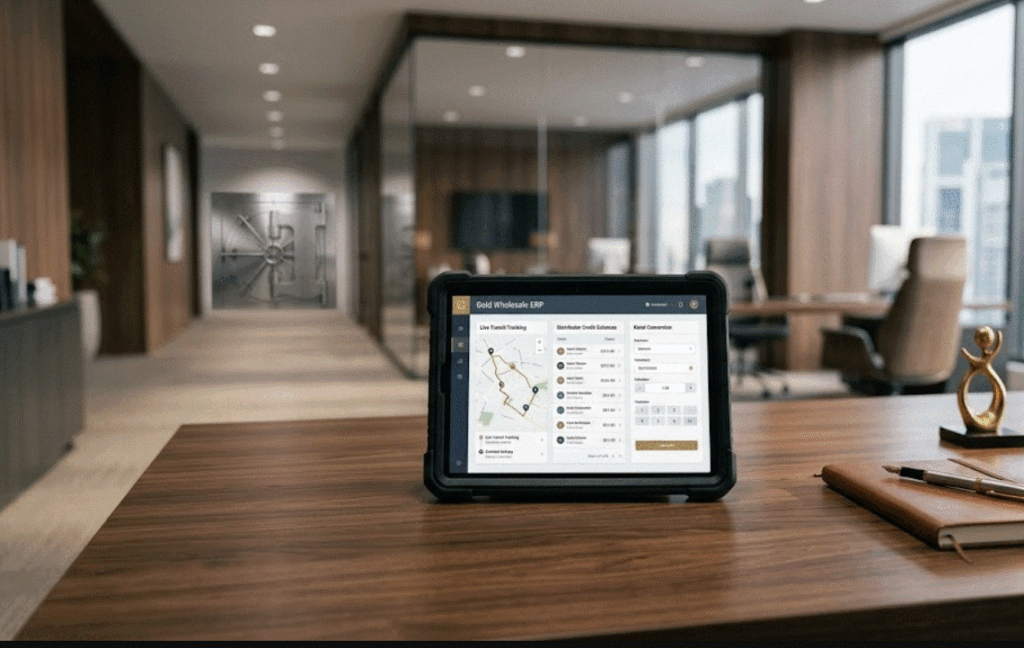
In the heart of the Middle East’s economic engine, the gold and jewelry sector stands as a pillar of heritage and high-value trade. For the Kingdom of Saudi Arabia, gold is more than just a luxury; it is a vital component of the national economy and a preferred investment vehicle for millions. However, as the Kingdom aggressively pursues its Vision 2030 goals, the traditional methods of managing jewelry shops and bullion trading are rapidly becoming obsolete. The modern Saudi jeweler faces a unique triad of challenges: extreme price volatility, stringent regulatory requirements from the Zakat, Tax, and Customs Authority (ZATCA), and the need for hyper-accurate inventory tracking. To navigate this landscape, a generic ERP (Enterprise Resource Planning) system simply isn’t enough. Specialized gold management software has shifted from a “competitive advantage” to a “strategic necessity.” This is where Daysum enters the frame—a localized, Odoo-powered solution designed specifically for the nuances of the Saudi gold market. By integrating real-time pricing, mobile-first agent tools, and full Phase 2 e-invoicing compliance, Daysum provides the digital backbone required for sustainable growth. Upgrade your business with our powerful gold inventory system tailored for jewelry and bullion traders to ensure you stay ahead in this evolving market. 1. Navigating the Storm: Real-Time Gold Price Updates The single most defining characteristic of the jewelry industry is volatility. Unlike traditional retail, where costs are relatively static, the “raw material” cost of a gold necklace can change several times within a single trading hour. Why Real-Time Tracking is Non-Negotiable In Saudi Arabia, where consumers are highly educated about gold rates, even a five-minute lag in price updates can lead to significant financial leakage or lost customer trust. If the global market spikes and your system doesn’t reflect it, you are essentially selling your assets at a discount. Conversely, if prices dip and your labels are outdated, you lose competitiveness. Daysum solves this by syncing live Saudi gold prices (including 18K, 21K, 22K, and 24K carats) automatically from trusted global and local sources. This automation eliminates the “human factor” and the risk of manual entry errors. While competitors like QaratERP display ounce and carat rates, they often lack the full, native automation that allows the entire sales system—from POS to e-commerce—to update instantaneously. Comparison of Pricing Accuracy Manual Systems: High risk of error, slow reaction to market “dips” or “spikes.” Basic Digital Tools: Often require manual refreshing or lack localized Saudi market feeds. Daysum: Native API integration ensures that every transaction is calculated using the absolute latest rate, protecting profit margins by the second. 2. Supporting the “Sharitiyah”: The Backbone of Saudi Sales The Saudi gold market is unique due to the role of Sharitiyah (independent or field sales agents). These agents are the mobile arms of large jewelry houses, reaching customers across different regions, often far from the central showroom. Mobile Empowerment for Field Agents Traditionally, Sharitiyah had to call the main office to confirm current gold rates or check if a specific 21K bracelet was still in stock. This creates bottlenecks. Daysum provides advanced mobile tools that allow agents to: Track Sales & Commissions: Real-time visibility into their performance and earned commissions. Inventory on the Go: The ability to see what is in the central vault vs. what they have in their personal “mobile” inventory. Instant Ledger Access: Viewing customer collection statuses and debt history without calling the accounting department. While competitors like Torcap emphasize tablet use for field sales, Daysum’s Odoo-based architecture allows for a more comprehensive mobile experience that tracks the agent’s entire lifecycle—from collection to commission settlement—ensuring that field operations are as transparent as showroom sales. 3. Revolutionizing the Showroom: Mobile Barcode Scanning & RFID For many jewelry shop owners, the cost of specialized hardware—such as industrial barcode scanners and dedicated POS terminals—is a major barrier to digital transformation. Hardware Independence with Smartphones Daysum disrupts this by enabling smartphone-based barcode scanning. By utilizing the high-definition cameras on standard mobile devices, staff can scan tags to record transactions, check prices, or perform stock counts. This significantly reduces operational costs and increases flexibility, especially during peak seasons like Ramadan or the Hajj season, when showrooms are crowded. The Power of RFID Integration Beyond standard barcodes, Daysum excels in RFID (Radio Frequency Identification) support. In the jewelry world, manual inventory counts are a nightmare—counting thousands of small rings and earrings one by one can take days. With Daysum’s RFID integration, a staff member can simply wave a scanner near a display case and count hundreds of items in seconds. This ensures that the top gold accounting software reflects the physical reality of the shop at all times. 4. Precision at Every Level: The Karat Conversion Tool In a market where transactions involve various purities—18K for luxury jewelry, 21K for traditional pieces, and 24K for investment bars—the math must be flawless. Automated Purity Calculations Daysum offers an intelligent tool that automatically calculates conversion rates based on gold purity and weight standards. This isn’t just about weight; it’s about the “pure gold content.” This is essential for: Buying Scrap Gold: Accurately determining the value of a customer’s old 18K gold when they want to trade it for a new 21K piece. Zakat Calculations: Saudi businesses must calculate Zakat based on the pure gold weight. Daysum automates this complex accounting task, ensuring compliance with religious and state requirements. Unlike basic tools that might only handle simple carat pricing, Daysum includes custom workflows for converting weights between gold, silver, and even integrating diamond carats into the total valuation. 5. The End-to-End Sales and Inventory Cycle A specialized system must manage the entire journey of the metal—from the moment a raw bullion bar is purchased to the moment it is sold as a finished masterpiece. Workflow Integration Daysum provides a seamless, end-to-end workflow that encompasses: Purchasing: Recording the buy-in of raw gold or finished pieces with real-time cost tracking. Manufacturing (MRP/BOM): For jewelers who design their own pieces, Daysum supports the Bill of Materials (BOM). This tracks the raw gold, the stones,

Read more
The secret to increase gold store profits in 2025

The secret to increase gold store profits in 2025

  The year 2025 marks a watershed moment for the jewelry and precious metals sector across the Kingdom of Saudi Arabia. With international gold prices eclipsing the psychological barrier of $3,000 per ounce, the commercial dynamics of buying, manufacturing, and retailing gold have been permanently transformed. This spectacular surge is not a fleeting trend but a structural market shift, driven by monumental central bank acquisitions, shifting global economic power, and sustained regional demand for high-karat jewelry. For retail owners and enterprise jewelers, this era of high valuations represents a spectacular opportunity to achieve unprecedented revenue milestones. Market leaders in the Kingdom, such as Amaak, have successfully navigated this climate to secure a breathtaking 57% surge in profit growth, netting approximately 280 million SAR. These elite organizations have proven that volatility, when managed correctly, is a catalyst for massive financial expansion. However, the margin for error has vanished. For shops operating on legacy systems, paper ledgers, or disjointed spreadsheets, the current market is a minefield. Industry data from 2025 reveals an alarming statistic: jewelry retailers lacking synchronized digital automation are bleeding between 20% to 30% of their gross profitability. These losses are entirely preventable, stemming from delayed pricing updates, invisible inventory shrinkage, and non-compliance penalties. In this highly competitive ecosystem, survival and dominance demand robust digital infrastructure. Implementing a state-of-the-art gold inventory system is no longer an optional upgrade; it is the fundamental baseline for commercial viability. In this definitive guide, we will dissect the driving forces behind the 2025 gold market, evaluate the foremost technological solutions available to Saudi merchants, and outline the precise strategies required to safeguard and multiply your retail profits. Part 1: Decoding the 2025 Precious Metals Market To effectively maneuver through the current economic climate, retail owners must possess a deep understanding of the macroeconomic variables dictating the price of raw materials. The surge past $3,000 per ounce is fueled by several converging global factors. The Impact of Institutional Accumulation The primary catalyst for the current price environment is the aggressive, sustained accumulation of physical gold by central banks worldwide. In an effort to diversify sovereign reserves and hedge against inflation, nations have been purchasing bullion at record-breaking volumes. This institutional hoarding restricts the available supply of physical gold on the open market. Consequently, Saudi retailers have witnessed local gold rates spike by over 25% year-over-year. For the retail merchant, this means the cost of replenishing showroom stock has never been higher, requiring flawless cash flow management and precise procurement timing. The Intraday Volatility Crisis Unlike traditional retail commodities, gold is a highly liquid financial asset. Its value fluctuates by the minute based on trading activity in global financial hubs like London, New York, and Shanghai. This intraday volatility presents a severe operational crisis for traditional jewelers: The Profit Margin Squeeze: If a merchant sells a 50-gram, 21-karat bridal set using a price that was updated an hour ago, a sudden market spike could mean the revenue collected is insufficient to replace the raw gold sold. Customer Trust vs. Profitability: Customers expect transparent and fair pricing. Constantly recalculating prices on a calculator breeds mistrust. Retailers need automated, undeniable screen pricing to justify costs to the consumer while protecting their own margins. The Extinction of Manual Operations The sheer complexity of managing varying purities (18k, 21k, 22k, 24k), diamonds, making charges, and fluctuating taxes renders manual operations obsolete. Relying on human calculation for high-velocity, high-value transactions guarantees mathematical errors. In 2025, deploying a centralized, automated software architecture is the only proven method to eradicate these costly operational blind spots. Part 2: Evaluating the Saudi Jewelry Software Ecosystem As the demand for digital transformation peaks, the Saudi market has been flooded with software providers promising retail optimization. However, managing a jewelry enterprise requires specialized, deep-tier functionality that standard retail point-of-sale (POS) systems simply cannot deliver. Let us systematically evaluate the leading platforms to identify the top gold accounting software capable of handling the rigors of the 2025 market. Competitor Matrix Analysis Software Platform Market Sync & Pricing ZATCA Phase 2 (Integration) Inventory Depth & Auditing Multi-Branch Centralization Target Market Profile Daysum (Odoo ERP) Fully Automated (Live API Feeds) Native XML, QR, & CSID RFID Ready, Deep Karat Tracking Limitless Cloud Scalability Mid-to-Large Retailers & Chains Qarat Manual/Delayed Refresh Partial (Add-ons Needed) Standard Entry Constrained Boutiques prioritizing social media Wazen Manual Entry Only Fully Compliant Financial/Ledger Focus Yes General service & retail firms Daftra Static Pricing Basic B2C Compliance Elementary Item Logging No Micro-kiosks and individual traders Why Daysum Leads the Market The distinction between Daysum and its competitors lies in its architectural foundation. While platforms like Daftra and Wazen provide excellent tools for generic accounting or simple retail, Daysum is engineered on the globally recognized Odoo ERP framework. This translates to enterprise-grade power. Daysum seamlessly bridges the gap between front-end sales, back-end accounting, and government tax portals. It offers live, API-driven pricing that synchronizes with global bullion markets in real-time. Furthermore, its ability to handle complex manufacturing processes—such as melting scrap gold and tracking weight loss during crafting—makes it an indispensable tool for serious jewelry operations. Part 3: Architecting Profitability with Daysum’s Core Features To comprehend how Daysum effectively shields businesses from the 20-30% profit losses plaguing traditional retailers, we must explore the specific mechanical features of the platform and how they execute daily operational defense. Precision Real-Time Pricing Engines The cornerstone of jewelry profitability is accurate pricing. Daysum eradicates the risk of human error by linking your local database directly to international exchange rates. When a client selects an item, the Daysum POS interface instantly calculates the final price by multiplying the exact weight of the piece by the live global rate for that specific karat. It then automatically appends the unique craftsmanship fee assigned to that design and accurately calculates the mandatory 15% VAT. This instantaneous, algorithm-driven process ensures that your baseline profit margin is locked in, regardless of how rapidly the market is moving outside your showroom doors. Comprehensive RFID Inventory Management Physical stock

Read more
كيفية تحليل بيانات المبيعات لتحسين الاستراتيجيات

How to Analyze Sales Data to Improve Strategies

In today’s competitive jewelry market, particularly within the rapidly expanding economy of Saudi Arabia, data-driven decision-making is no longer a luxury but a necessity. The Kingdom’s retail landscape is shifting, and for businesses specializing in precious metals, the ability to translate raw numbers into actionable growth plans is the defining factor of success. By analyzing sales data, jewelers can gain valuable insights into customer behavior, identify trends, and optimize their strategies to drive growth. Recent market observations show that Saudi jewelry stores achieved up to 167% sales growth through the implementation of SEO-driven analytics and robust backend systems. Digitizing your operations with advanced gold software built for the Saudi market is the first step toward reclaiming your competitive edge. Why Sales Analysis Matters in the Saudi Context The Saudi jewelry market is unique, characterized by high seasonal volatility, specific cultural preferences for high-karat gold (such as 21K and 22K), and a strict regulatory environment governed by ZATCA. Analyzing sales data allows you to look past the surface-level revenue and understand the mechanics of your profitability. Revealing Customer Preferences Sales analysis reveals which karats are trending and which specific designs resonate with the local demographic. For instance, do your customers in Riyadh prefer traditional heavy bridal sets, or is there a growing trend toward minimalist 18K gold in Jeddah? Data removes the guesswork, allowing you to cut slow-moving stock by up to 30%. Measuring Seasonal Peaks In Saudi Arabia, sales data analysis highlights the massive impact of Ramadan, the two Eids, and the peak wedding seasons. By identifying these peaks, a business can optimize its gold inventory system to ensure high-demand items are never out of stock during the most profitable weeks of the year. Identifying Marketing ROI Many jewelers spend heavily on social media influencers and digital ads. Data analysis helps calculate the return on investment (ROI) for each campaign. In one notable case, a Saudi jewelry firm saw a 247% increase in organic clicks by shifting their budget to high-performing channels identified through sales trend analysis. Ensuring Regulatory Compliance With the rollout of the Phase 2 Integration for the Zakat, Tax and Customs Authority (ZATCA), data accuracy is synonymous with legal compliance. Utilizing zatca approved accounting software ensures that your sales data is not only used for growth but is also perfectly formatted for government audits, avoiding costly fines. Effective Analysis Steps: A Framework for Growth To achieve a 167% revenue jump, as seen in top-performing Saudi firms, you must follow a structured approach to your data. Below is a framework designed for the local market. Table 1: Sales Data Analysis Framework Step Purpose Recommended Saudi-Relevant Tools 1. Data Collection & Cleaning Consolidate POS, e-commerce, and CRM data while removing duplicates and errors. Daysum ERP, DEXEF, Odoo 2. Descriptive Analysis Summarize historical performance (means, trends, top-sellers). Power BI, Excel, Daysum Dashboards 3. Diagnostic Analysis Investigate root causes (e.g., why did sales drop in Q3?). Qaraterp, Skysoft, Custom SQL 4. Predictive Analysis Forecast future trends using historical patterns and market indicators. Daysum AI Modules, Trendsoft 5. Prescriptive Analysis Recommend specific actions (e.g., targeted promotions for VIP customers). Wazen, iSales, Daysum CRM The Four Levels of Jewelry Sales Data Analysis 1. Descriptive Analysis: “What Happened?” This is the foundational level where you summarize your data using metrics like mean, median, and standard deviation. In a jewelry context, this involves looking at your total sales for the last quarter and identifying your top-performing karats. It provides a baseline to celebrate successes and identify glaring inefficiencies in your gold erp system. 2. Diagnostic Analysis: “Why Did It Happen?” If your sales in 18K gold rings dropped by 15% in February, diagnostic analysis digs into the “why.” Was it due to a localized price hike? Did a competitor launch a major promotion? Did your sales team require more training? By investigating the root causes, you prevent repeating the same mistakes. 3. Predictive Analysis: “What Will Happen?” By using historical data and statistical models, you can forecast future sales trends. This is crucial for planning your golden inventory system. Predictive models can tell you that based on the last three years of data, you need to increase your stock of 21K bridal sets by 25% three weeks before the start of the summer wedding season. 4. Prescriptive Analysis: “How Can We Make It Happen?” The highest level of analysis suggests specific actions. If the data shows a high interest in gold coins during economic fluctuations, a prescriptive recommendation would be to launch a targeted email campaign to your “investment-tier” customers. Implementing best gold accounting software allows these recommendations to be generated automatically through machine learning algorithms. Top Jewelry Analytics Tools in Saudi Arabia Choosing the right technology is essential for accurate reporting. The Saudi market requires tools that handle Arabic support, Karat conversions, and ZATCA integration. Table 2: Leading Saudi Gold ERP Competitors Platform Key Sales Analytics Features Saudi Compliance Pricing Model Daysum ERP Live dashboards, global gold price sync, AI-driven inventory forecasting. Full e-invoicing zatca Phase 2 SaaS Subscription DEXEF 300+ detailed reports, specific item profitability, multi-branch tracking. ZATCA Approved Per-user license Wazen Performance analysis for sales teams, promotional ROI tracking. ZATCA Integrated Cloud-based Qaraterp Cloud-based demand forecasting, specialized gold shop modules. Localized Support Enterprise custom Skysoft Khwarizmi Detailed karat analytics, support for local workshop accounting. Arabic-first interface Modular When selecting your platform, it is vital to ensure that your choice supports e invoicing zatca to streamline your financial reporting and avoid manual data entry errors that could lead to audit discrepancies. Strategies for Improving Sales Based on Data Analysis Once you have gathered and cleaned your data, the real work begins: transforming those insights into revenue. Here are four data-driven strategies for the modern jeweler. 1. Product Optimization Not all gold is created equal in the eyes of the consumer. Data analysis allows you to: Identify Best-Sellers: Focus your display space and marketing budget on your top-performing products. Optimize Inventory: Analyze turnover rates to ensure you aren’t overstocked on heavy 24K items

Read more
كيفية استخدام البيانات لتحسين إدارة المخزون

How to Use Data to Enhance Inventory Management

In today’s hyper-competitive and fast-paced business environment, effective inventory management has transitioned from a back-office administrative task to a core pillar of strategic success. For decades, businesses relied on “gut feeling” and manual ledgers to decide what to order and when. However, in the modern era—particularly within the sophisticated markets of Saudi Arabia and the GCC—proper inventory management is the difference between a thriving enterprise and one buried under the weight of its own inefficiencies. Achieving the delicate balance between meeting surging customer demands and minimizing holding costs is a constant challenge. Traditional methods often result in a “feast or famine” cycle: either you have too much capital tied up in slow-moving stock, or you suffer from the “silent killer” of retail—the stockout. This is where the transformative power of data comes into play. By harnessing advanced data analysis, businesses can move from a reactive state to a proactive, predictive model of operation. This article explores the deep integration of data into the supply chain, providing actionable strategies to help optimize your operations. Boost efficiency and reduce errors with our specialized gold inventory system for jewelry stores, designed to handle the unique complexities of high-value assets. Understanding Inventory Management and Its Modern Challenges Inventory management involves the systematic oversight of ordering, storing, and using a company’s inventory. It is the rhythmic heart of the supply chain, and any “arrhythmia” here directly impacts a company’s bottom line. The Traditional Hurdles Despite its importance, many businesses remain tethered to traditional methods that are no longer fit for purpose. Common challenges include: Overstocking: Excess inventory traps liquid capital, increases insurance costs, and risks obsolescence—especially in sectors like electronics or fashion. Stockouts: Failing to have a product when a customer wants it doesn’t just lose a single sale; it erodes brand loyalty and drives customers to competitors. Inefficient Order Processes: Manual reordering often ignores lead time variability, leading to panic buying or shipping delays. One of the most impactful strategies for overcoming these hurdles is improving inventory management with data. By leveraging analytics, businesses gain a “X-ray view” into their stock levels, customer purchasing behaviors, and macro-market trends. The Role of Data in Modern Inventory Ecosystems Data analytics offers a transformative, multi-dimensional approach to how a business views its warehouse. By analyzing inventory data, you uncover “invisible” patterns that can guide every strategic decision from the boardroom to the loading dock. 1. Sales Trends and Predictive Modeling Historical sales data is a goldmine. By looking at what sold, when it sold, and at what price, businesses can build predictive models. For instance, if data shows a 20% spike in a specific jewelry set every Mother’s Day, you can preemptively adjust stock levels. This shift from “hindsight” to “foresight” is what defines a market leader. 2. Real-Time Stock Level Visibility Regular analysis of current stock levels helps identify the “dead weight”—products that haven’t moved in 90 days—enabling you to liquidate or discount them to free up shelf space. Conversely, it highlights “fast-movers” that require immediate attention. 3. Supplier Lead Time Optimization Data analysis allows you to track the performance of your suppliers. If a supplier consistently delivers two days later than promised, your top gold accounting software should automatically adjust your reorder points to account for this lag, virtually eliminating the risk of stockouts. Inventory Data Analysis: Industry Best Practices for 2026 To truly reap the benefits of data, businesses must implement a structured approach to analysis. It isn’t enough to just “have” data; you must have a “data culture.” 1. Automated Data Collection Garbage in, garbage out. The foundation of inventory data analysis is accuracy. Start by gathering detailed data on sales, returns, and lead times. Use automated tools—like barcode scanners or RFID—to ensure that data collection is consistent. Integrating these tools with an ERP like Daysum ensures that every gram of gold or every unit of product is accounted for the moment it moves. 2. Deep Historical Analysis Identify seasonal trends beyond the obvious holidays. Does a heatwave impact your sales? Does a local festival change the demand for high-carat gold? By recognizing these variables, businesses make smarter, data-backed purchasing decisions. 3. Monitoring Critical KPIs Focus on the metrics that actually move the needle: Inventory Turnover Rate: How many times you sold and replaced your stock over a period. Days Sales of Inventory (DSI): How long it takes to turn your inventory into sales. Stockout Rate: The percentage of items unavailable when requested. 4. The Loop of Continuous Improvement Inventory analysis is not a “set it and forget it” task. Market conditions in the GCC change rapidly. Regularly revisit your analysis methods to ensure your strategies remain responsive to the latest data. Data-Enhanced Inventory Strategies When data is integrated into your strategy, it acts as a force multiplier for proven management techniques. Just-in-Time (JIT) Inventory JIT aims to minimize waste by ensuring goods arrive exactly when they are needed. In the jewelry trade, where raw gold is expensive, JIT is vital. However, JIT is high-risk without data. You need 100% accurate demand forecasting and a deep understanding of supplier reliability to make JIT work without causing a production halt. ABC Analysis: Prioritizing Your Assets Not all inventory is created equal. Using odoo implementation saudi arabia allows you to categorize your stock into three buckets: Category A: High-value items (e.g., diamond sets) that require tight control and frequent analysis. Category B: Moderate value items. Category C: Low-value, high-volume items (e.g., silver charms) that can be managed with less frequent oversight. Demand Forecasting 2.0 Accurate forecasting now utilizes external factors. By merging your internal sales data with external economic indicators (like the current gold fix rate) or local events, you create a “weather forecast” for your inventory, allowing you to prepare for a “storm” of demand or a “drought” of sales. Essential Data Tools for Inventory Excellence Investing in the right tech stack is the only way to facilitate deep inventory data analysis. 1. Integrated ERP Software A specialized system, like Daysum’s Gold ERP,

Read more
أهمية التحليل المالي في صناعة الذهب

The Importance of Financial Analysis in the Gold Industry

In the shimmering world of high-value trade, it is often said that “all that glitters is not gold.” In 2026, a more accurate proverb for the industry might be: “All that glitters is not profit—unless the data says so.” The gold industry holds a titan-like place in the global economy, serving as much more than a raw material for luxury; it is a safe-haven asset, a hedge against inflation, and the bedrock of financial stability for nations. However, for the individual jeweler, wholesaler, or manufacturer, the beauty of the metal often masks the brutal complexity of its trade. As we navigate a year marked by rapid geopolitical shifts, fluctuating market prices, and the aggressive digital mandates of the Saudi Vision 2030, the importance of financial analysis has transitioned from a “back-office task” to a “front-line survival strategy.” Success today requires more than an eye for design; it requires a gold inventory system that can track a milligram as accurately as it tracks a million riyals. In this definitive guide, we will explore the intricate layers of financial analysis in the jewelry sector and how leveraging the right ERP solutions can turn a volatile market into a playground for growth. Deconstructing Financial Analysis for the Jewelry Sector At its core, financial analysis for jewelry is the systematic evaluation of a business’s financial health, tailored specifically to the high-stakes, low-margin environment of precious metals and gemstones. Unlike standard retail, where inventory might depreciate or stay static, gold is a “live” asset. Its value changes while it sits in your display case. 1 Beyond the Balance Sheet: The “Live” Asset Challenge Financial analysis in this sector isn’t just about looking at what you sold yesterday; it’s about understanding the “replacement cost” of your stock today. If the price of gold spikes by 5% globally, your sales revenue might look impressive, but if your financial analysis doesn’t account for the increased cost of restocking that gold, you may find yourself “selling into a loss.” A thorough analysis encompasses: Revenue Streams: Distinguishing between bullion sales, scrap gold buy-backs, and craftsmanship fees (Making Charges). Cost Structures: Analyzing the volatility of raw material costs vs. fixed operational overheads. Cash Flow Velocity: Measuring how quickly “metal” turns back into “liquid cash” to re-enter the market. 2 The “Gold” Metrics: Key Performance Indicators (KPIs) To master the market, a jeweler must move beyond simple “Profit vs. Loss” and embrace specialized KPIs. A. Gross Margin Analysis In jewelry, the gross margin is often razor-thin on the metal itself but high on the craftsmanship. A healthy analysis requires separating these two. The formula is: $$text{Gross Margin} = frac{text{Revenue} – text{COGS}}{text{Revenue}} times 100$$ Using top gold accounting software allows you to see this margin per item, per carat, and even per artisan. B. Return on Investment (ROI) Whether you are investing in a new 3D jewelry printer or a marketing campaign for the Ramadan season, you need to know if your capital is working. $$text{ROI} = frac{text{Net Profit}}{text{Total Investment}} times 100$$ In 2026, with the rise of lab-grown diamonds and high-tech alloys, ROI analysis helps businesses decide which inventory categories deserve more capital allocation. Why the Gold Industry is Defined by Data in 2026 The gold industry is famously volatile. Geopolitical tensions in Eastern Europe or the Middle East can send prices soaring in minutes. Without real-time financial analysis, a jeweler is essentially flying blind in a storm. 1 Informed Decision-Making in a Volatile Market Strategy in the gold trade is a game of timing. Should you buy raw gold now, or wait for the central bank’s interest rate announcement? Financial analysis provides the historical context and predictive modeling needed to make these calls. For example, a leading jewelry retailer in Riyadh recently utilized advanced data analytics to assess consumer trends during the Hajj season. They discovered that while gold demand remained steady, the preference had shifted from 22K traditional sets to 18K “lightweight” contemporary designs. By pivoting their production 45 days in advance, they increased their turnover by 40%. This wasn’t a “hunch”—it was the result of a rigorous odoo implementation saudi arabia that tracked sales trends down to the gram. 2 Advanced Risk Management and ZATCA Compliance Risk management today isn’t just about price; it’s about regulation. In the Saudi market, the integration of e invoicing zatca Phase 2 has made financial transparency a legal mandate. Financial analysis acts as an early warning system. By monitoring “Variance Analysis”—the difference between expected costs and actual costs—businesses can identify internal leakages, such as “unaccounted gold loss” during the polishing process, or external risks, such as tax non-compliance penalties that could wipe out an entire quarter’s profit. Strategic Frameworks for Financial Mastery To succeed, businesses must stop treating financial analysis as a “year-end” event and start treating it as a “per-transaction” habit. 1 Developing the Analysis Framework A robust framework for a jewelry business in 2026 should look like this: Objective Setting: Are you analyzing for “Survival” (Cash flow) or “Expansion” (Market share)? Granular Data Collection: Your data must include the weight, purity (Karat), stone clarity, and the daily gold fix rate at the time of transaction. Real-Time Variance Reporting: Comparing your actual labor costs and metal loss against your “Standard Costing.” Strategic Adaptation: Using the insights to hedge your gold positions or adjust your “Making Charges” to stay competitive. 2 The Power of Comparative Benchmarking Comparative analysis allows you to look at your neighbors without leaving your office. By benchmarking your gross margins and inventory turnover against industry standards in the GCC, you can identify if your pricing is too aggressive or if your stock is moving too slowly. If your competitors are turning over their 21K bridal sets every 60 days while yours take 120, you have a “dead capital” problem that only financial analysis can solve. The Digital Revolution: Essential Tools for the Modern Jeweler The days of the “green ledger” and manual calculators are over. The complexity of modern VAT, e-invoicing, and global gold fix rates requires a

Read more
أساليب توقع الطلب على الذهب والمجوهرات

How AI Can Improve Business Decisions in the Gold Industry

The gold industry has long served as a fundamental cornerstone of global commerce, universally prized for both its enduring aesthetic appeal and its unshakeable intrinsic value. For centuries, the processes surrounding the discovery, extraction, and retail of this precious metal relied heavily on human intuition, physical labor, and historical precedents. However, as the modern market evolves at an unprecedented pace, businesses must adapt their operational strategies to stay competitive. One of the most profoundly transformative influences in the commercial world today is artificial intelligence (AI). By strategically harnessing advanced AI technologies, organizations operating across the entire gold sector—from deep-pit mining to luxury retail showrooms—can dramatically enhance their decision-making processes, optimize their daily operations, and ultimately drive unprecedented profitability. This comprehensive guide explores exactly how artificial intelligence is improving business decisions within the gold industry, highlighting the significant, measurable benefits that come with its successful implementation in the Saudi Arabian market. Master your stock and sales with the smartest gold inventory management platform in Saudi Arabia. AI Fundamentals in the Modern Gold Sector Artificial intelligence encompasses a broad, sophisticated range of technologies that empower machine networks to mimic complex human cognitive functions, such as continuous learning, dynamic problem-solving, and strategic decision-making. Within the context of the gold industry, AI is far more than a buzzword; it is a vital operational tool utilized in diverse applications ranging from upstream geological exploration to downstream customer engagement. In the upstream mining sector, AI fundamentally alters how resources are located. Advanced algorithms process massive, complex datasets of geological, topographical, and seismological information to identify the most probable locations for lucrative gold deposits. Furthermore, AI engines predict heavy machinery maintenance requirements before catastrophic failures occur, and they relentlessly optimize global supply chains to ensure raw materials move efficiently. A prime example within the Kingdom of Saudi Arabia is the operations of Ma’aden. At their massive Mansourah-Massarah mine, the integration of AI-driven technologies is a driving force behind their ambitious target of producing 250,000 ounces of gold per year, showcasing the massive scale at which machine learning operates. Downstream, in the commercial retail environment, AI is completely revolutionizing the consumer experience. Modern jewelry retailers are aggressively integrating Augmented Reality (AR) virtual try-on software into their digital storefronts. This technology allows a shopper to use their smartphone camera to visualize exactly how a specific gold necklace or ring will look on them in real-time. This immersive, AI-powered experience drastically reduces product return rates and empowers platforms to offer hyper-personalized product recommendations, significantly boosting overall conversion rates. To seamlessly manage these front-end innovations, retailers must back them with robust gold retail software capable of handling dynamic, AI-driven inventory shifts. The Unfair Advantage of Data-Driven Decisions In the contemporary commercial landscape, data-driven decision-making is no longer an optional luxury; it is an absolute necessity for any enterprise looking to thrive and survive in a fiercely competitive environment. Traditional decision-making methodologies were often heavily based on gut intuition, limited historical perspectives, and individual executive experience. While valuable, these human-centric methods frequently lead to operational inefficiencies, costly miscalculations, and missed market opportunities. With the advent of artificial intelligence, businesses can now rapidly process and analyze vast, intricate datasets encompassing global pricing fluctuations, shifting market trends, and granular consumer behavioral patterns at speeds completely impossible for human analysts. Enhancing commercial decisions with AI involves deploying sophisticated algorithms designed specifically to discern hidden patterns in data. The impact metrics of this shift are staggering. In the mining sector, traditional, human-led geological discovery methods typically yield a success rate hovering around 55%—meaning nearly half of all exploration investments result in dry, unprofitable boreholes. Conversely, AI-backed predictive models boast an astonishing 80% discovery success rate, saving corporations millions of dollars in wasted drilling expenditures. Similarly, in the retail space, forecasting consumer demand requires precision. Utilizing an advanced gold erp system, jewelers can accurately predict seasonal demand surges—such as the massive spikes seen during regional wedding seasons or major holidays like Eid al-Fitr. This ensures that the exact designs consumers want are readily available, eliminating the costly burden of overstocking unpopular items. Key AI Applications (Mining vs. Jewelry Sales) The versatility of artificial intelligence allows it to be perfectly tailored to the vastly different needs of the upstream and downstream segments of the gold supply chain. Below is a detailed comparative breakdown illustrating how specific AI technologies deliver targeted benefits across the industry lifecycle. Technological Application Benefits for Gold Mining (Upstream) Benefits for Jewelry Sales (Downstream) Predictive Analytics Enhances resource detection accuracy by +25% and optimizes chemical recovery processes to achieve 85-90% extraction efficiency. Powers highly accurate gold inventory system optimization, ensuring optimal stock levels based on predictive seasonal trends. Machine Learning (ML) Facilitates predictive equipment maintenance, drastically reducing downtime, and enhances overall operational risk management. Drives personalized marketing campaigns, analyzing past purchases to increase customer retention and boost total conversion rates. Augmented Reality (AR) & Virtual Try-On Not directly applicable to raw mineral extraction. Provides immersive visual previews, allowing customers to “wear” digital jewelry, significantly increasing upselling opportunities. Intelligent Chatbots Not directly applicable to raw mineral extraction. Delivers responsive, 24/7 customer service, assisting buyers with custom orders and offering tailored styling advice instantly. As demonstrated, the implementation of these technologies completely redefines operational capabilities. For retailers aiming to seamlessly orchestrate these advanced customer-facing tools, deploying a comprehensive gold management system is critical to ensure back-end inventory matches front-end demand. Saudi Competitors in Gold Tech (The Competitive Landscape) The rapid modernization of the Saudi Arabian economy, driven by Vision 2030, has created a highly competitive market for enterprise software specifically tailored to the precious metals sector. Choosing the correct technological infrastructure is paramount. Here is an analytical comparison of the leading platforms available to Saudi businesses today: ERP Platform Core Artificial Intelligence Features Key Market Strengths & Capabilities Daysum Gold ERP Features live global pricing synchronization, advanced AI inventory tracking, and automated intelligent reordering protocols. Perfectly tailored for the Saudi market, offering bilingual support and absolute, uncompromising compliance with regional mandates. SowaanERP Utilizes predictive stock algorithms

Read more
Moving to the Cloud: How Daysum’s Cloud ERP Solutions Elevate Your Business

Moving to the Cloud: How Daysum’s Cloud ERP Solutions Elevate Your Business

In the contemporary commercial landscape, organizations are experiencing a paradigm shift driven by the sheer necessity of technological agility. The traditional methods of managing corporate data, reliant on localized servers and fragmented software applications, are rapidly becoming obsolete. In today’s era of rapid digital transformation, moving to robust cloud based ERP solutions is essential for businesses looking to expand their operational footprint and achieve greater structural flexibility. These sophisticated digital infrastructures are no longer just optional IT upgrades; they are the fundamental keys to sustainable growth. By migrating core operations to the cloud, companies are uniquely positioned to manage complex processes efficiently, aggressively cut administrative and hardware costs, and fortify their data against emerging cybersecurity threats. Daysum is at the forefront of this technological revolution, providing highly innovative cloud solutions that support Saudi businesses in boosting their daily performance and building an insurmountable competitive edge in a dynamic, hyper-competitive Middle Eastern landscape. Whether your enterprise is a burgeoning retail chain or a massive industrial manufacturer, understanding the mechanics, benefits, and strategic implementation of cloud architecture is the first step toward securing your market dominance. Understanding the Architecture: What is Cloud ERP? At its core, cloud based ERP (Enterprise Resource Planning) is a comprehensive business management system hosted and managed entirely online, typically on secure, remote server networks. Unlike legacy on-premise solutions that require companies to purchase, install, and maintain expensive physical servers within their own office buildings, cloud architecture allows businesses to access their centralized database anytime, from anywhere, utilizing a standard internet connection. The true power of this system lies in its interconnectivity. It seamlessly integrates various distinct business functions—such as financial accounting, supply chain logistics, human resources, and customer relationship management (CRM)—into one unified, intelligent dashboard. This provides executive leadership with a holistic, real-time overview of the organization’s health, offering a comprehensive solution for effective business management as part of a broader corporate digital transformation strategy. For specialized sectors, this level of integration is critical. For businesses dealing with precious metals, incorporating specialized utilities like a gold karat conversion calculator directly into the cloud platform can exponentially enhance precision in daily financial reporting. Additionally, deploying a robust, automated accounting system ensures that all corporate financial transactions are instantly recorded, categorized, and managed with absolute mathematical accuracy, entirely removing the friction of manual data entry. The Strategic Shift: Cloud vs. Legacy On-Premise Systems To fully grasp why leading Saudi enterprises are abandoning their physical servers, we must analyze the stark operational differences between the two architectures. Architectural Feature Traditional On-Premise Systems Daysum’s Cloud ERP Ecosystem Capital Investment High initial CapEx. Requires purchasing physical servers, cooling systems, and perpetual software licenses. Low initial investment. Operates on a predictable, subscription-based OpEx model. Deployment Speed Slow and highly disruptive. Can take months to physically install hardware and configure local networks. Rapid deployment. The infrastructure is already built; implementation focuses entirely on software configuration. System Maintenance Burden falls on the internal IT staff. Requires manual patching, physical repairs, and constant monitoring. Fully managed by Daysum. Updates, security patches, and server maintenance happen automatically in the background. Accessibility Restricted. Typically accessible only from within the physical office network or via clunky VPNs. Universal. Secure, encrypted access from any device, anywhere in the world, facilitating true remote work. Disaster Recovery High risk. Localized events (fires, floods, hardware failure) can result in catastrophic data loss. Highly resilient. Data is continuously backed up across geographically distributed, redundant server farms. The Catalyst for Expansion: Benefits of Moving to the Cloud with Daysum Transitioning your digital infrastructure to Daysum’s ecosystem unlocks a multitude of strategic advantages designed to propel your enterprise forward. By integrating a comprehensive suite like odoo business management software, companies can leverage the following transformative benefits: Elastic Scalability and Unrestricted Growth In a volatile market, your software must be able to adapt instantly. Daysum’s cloud solutions allow businesses to scale their computing power and storage capacity up or down based on real-time demand. If a retail business experiences a massive surge in transactions during peak shopping seasons like Ramadan, the cloud infrastructure seamlessly allocates more resources to handle the load without crashing. Conversely, during slower periods, resources can be scaled back. This elasticity ensures you are never paying for dormant server space and allows for infinite growth without the need for costly hardware overhauls or extensive physical setup fees. The system dynamically adapts to meet changing business needs, enabling seamless, borderless scalability. Radical Reduction in Operational Costs Maintaining an on-premise data center is a financial drain. It requires constant electricity, cooling, physical security, and a dedicated team of IT professionals just to keep the lights on. With cloud ERP, these costs are entirely absorbed by the provider. Companies immediately save on hardware depreciation, emergency maintenance, and expensive, disruptive software upgrades. Daysum actively supports Saudi businesses by drastically reducing internal IT overhead, enabling critical capital and human resources to be redirected towards revenue-generating initiatives, product development, and aggressive market expansion. Uncompromising, Enterprise-Grade Data Security In the modern digital era, data is your most valuable asset, and protecting it is paramount. On-premise servers are highly vulnerable to localized physical damage, internal theft, and sophisticated ransomware attacks if not perfectly maintained. Data security is a top priority at Daysum. We provide military-grade protection within our cloud environments, utilizing advanced, end-to-end encryption protocols, continuous threat monitoring, and automated intrusion detection systems to secure your sensitive corporate data and definitively prevent unauthorized breaches. Furthermore, our automated, redundant backup protocols guarantee that even in the event of a localized disruption, your data remains fully intact and instantly recoverable. Enhanced Collaboration and Universal Accessibility The modern workforce is increasingly distributed. Operating with siloed, localized software stifles communication and delays project execution. Daysum’s cloud solutions demolish these barriers by allowing cross-functional teams to access live data, generate reports, and share critical information in real-time, regardless of their physical location. Whether your sales team is closing a deal in Jeddah or your financial controller is reviewing ledgers in Dammam, everyone operates from a single,

Read more
top
Business Challenges

Digital Transformation

Security

Automation

Gaining Efficiency