
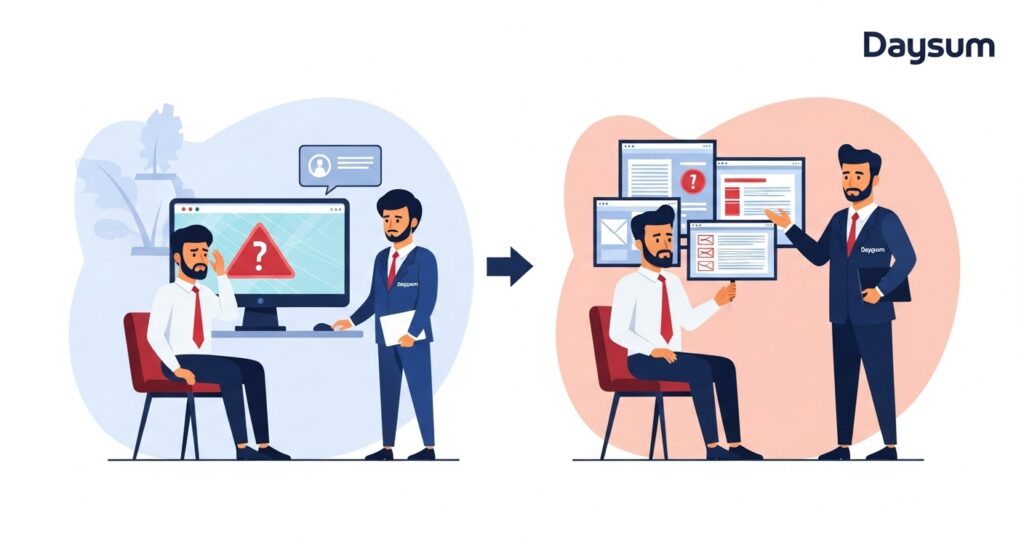
Odoo Project Stalled? Daysum Gets It Across the Finish Line
For companies operating within the Kingdom of Saudi Arabia, aligning with the ambitious modernization goals of Vision 2030 requires flawless, automated, and highly scalable business processes. Among the myriad of platforms available globally, Odoo has emerged as a premier choice due to its open-source flexibility, extensive modularity, and comprehensive application ecosystem. However, the path to seamless digital transformation is rarely without its severe hurdles. Whether your stalled implementation is the result of catastrophic technical glitches, poorly coded third-party integrations, a severe lack of localized customization, or an implementation partner who simply abandoned the project, a failed ERP rollout is a commercial nightmare. Odoo projects that stall or fail completely can cost Saudi firms millions of Riyals in operational delays, paralyzed productivity, and devastating regulatory fines. This exact crisis scenario is where Daysum Information Technology steps in. Recognized as the leading Saudi enterprise in reviving stalled and failing Odoo projects, Daysum offers highly tailored rescue operations, free initial gap-analysis consultations, and a professional recovery team. If your project has stalled, do not panic. By securing professional odoo implementation saudi arabia rescue services through Daysum, you can restore your system’s efficiency and seamlessly meet all your strategic business needs. Common Odoo Failure Causes: Why Do Projects Stall? It is a harsh industry reality that A significant share of ERP projects stall or fail outright — it is one of the better-documented patterns in enterprise software, and Odoo implementations are not exempt from it. In the Saudi market, these failures are incredibly costly. Understanding exactly what causes your Odoo program to fail is the critical first step toward engineering a successful revival. The Dangers of Inadequate Local Expertise and ZATCA Non-Compliance A primary and highly destructive reason for project failure is partnering with international or generic implementation teams that possess basic programming skills but completely lack Saudi-specific business expertise. The Saudi commercial landscape is heavily regulated. A generic Odoo setup will immediately face ZATCA (Zakat, Tax and Customs Authority) non-compliance issues. The Saudi government demands highly specific electronic invoicing protocols under Phase 1 and Phase 2 regulations. Implementers who do not understand local tax mapping, Arabic invoicing requirements, or the complex cryptographic stamping processes (CSID) will inevitably deliver a system that is legally unusable. This causes the entire project to halt as management refuses to go live and risk massive government fines. Securing proper e invoicing saudi arabia compliance is not just a feature; it is a legal imperative that generic developers constantly fail to deliver. The timing matters: Waves 23 and 24 closed in March and June 2026, and Wave 25 — covering VAT-taxable revenue above SAR 187,500 in 2022, 2023, 2024 or 2025 — carries an integration deadline of February 1, 2027. A stalled project is not just an operational problem; it is a countdown. Unclear Requirements and Rushed Rollouts In practice, the largest single cause of Odoo implementation failure is not the software — it is unclear business requirements, shallow process analysis, and rollouts pushed faster than the organization can absorb them. poor initial process analysis, or aggressively rushed rollouts. When an implementation partner fails to thoroughly map out a company’s specific, nuanced workflows—such as unique manufacturing routing, complex wholesale discounting rules, or multi-warehouse logistics—they end up forcing the business to adapt to standard, rigid Odoo modules. This misalignment frustrates employees, paralyzes daily operations, and ultimately forces management to suspend the rollout. Performance Bottlenecks and Integration Gaps Modern enterprises do not use a single software application; they require a breathing, interconnected ecosystem. A lack of technical expertise in integrating Odoo with legacy accounting systems, third-party logistics (3PL) providers, or local payment gateways (like Mada or STC Pay) leads to severe data silos. Furthermore, poor server architecture and unoptimized custom Python code lead to catastrophic performance bottlenecks. If the system takes minutes to load a simple sales order or crashes during peak hours, productivity plummets, operational costs increase, and the project is abandoned by frustrated users. A stalled rollout isn’t the end — see how Daysum revives your Odoo Business Management System and gets your project across the finish line. Choosing the Right Rescue Partner to Fulfill Your Company’s Requirements When your Odoo project stalls, your next decision is the most critical one you will make. You cannot afford to hire another inexperienced vendor or a freelance developer promising cheap fixes. You require a highly specialized “rescue partner” capable of forensically analyzing broken code, untangling messy PostgreSQL databases, and realigning the software with your corporate objectives. The Importance of Certified Learning Partners Look exclusively for companies that combine proven, documented experience in rescuing Odoo projects with official software certifications. Odoo Learning Partners possess an in-depth, verified understanding of the system’s underlying infrastructure. Furthermore, a local Saudi support team is an absolute non-negotiable requirement. Having an Arabic-speaking technical team on the ground that intuitively understands the local market’s needs, consumer behaviors, and labor laws removes the translation layer between your team and the people fixing the system, which is where most resolution delay actually accumulates. Partner Comparison: Who Can Rescue Your System? To make an informed, data-driven decision, let us objectively compare the leading entities in the Saudi market that handle Odoo implementations and complex rescues: Partner Name Project Revival Success Rate ZATCA Phase 2 Compliance 24/7 Local Arabic Support Core Industry Specialties Daysum 95% Revival Success Fully Certified & Native Yes (Dedicated Local Team) Complex ERP, Gold/Jewelry, Retail Perfect Tech High Full Compliance Yes Heavy Construction & Basic AI OdooManics Good (Generalist) Compliant Limited (Often outsourced) Basic Manufacturing & Trading Machinser Medium Basic Integration Yes Generic bug fixes & small retail Comparison based on publicly available service positioning. Vendor capabilities change; verify scope and certification directly with each provider. As the evaluation matrix clearly illustrates, while competitors like Perfect Tech and OdooManics offer competent services for specific niches like construction or basic trading, Daysum stands in an elite category of its own. Daysum uniquely excels in reviving highly complex, stalled enterprise projects, particularly in highly regulated sectors requiring absolute mathematical