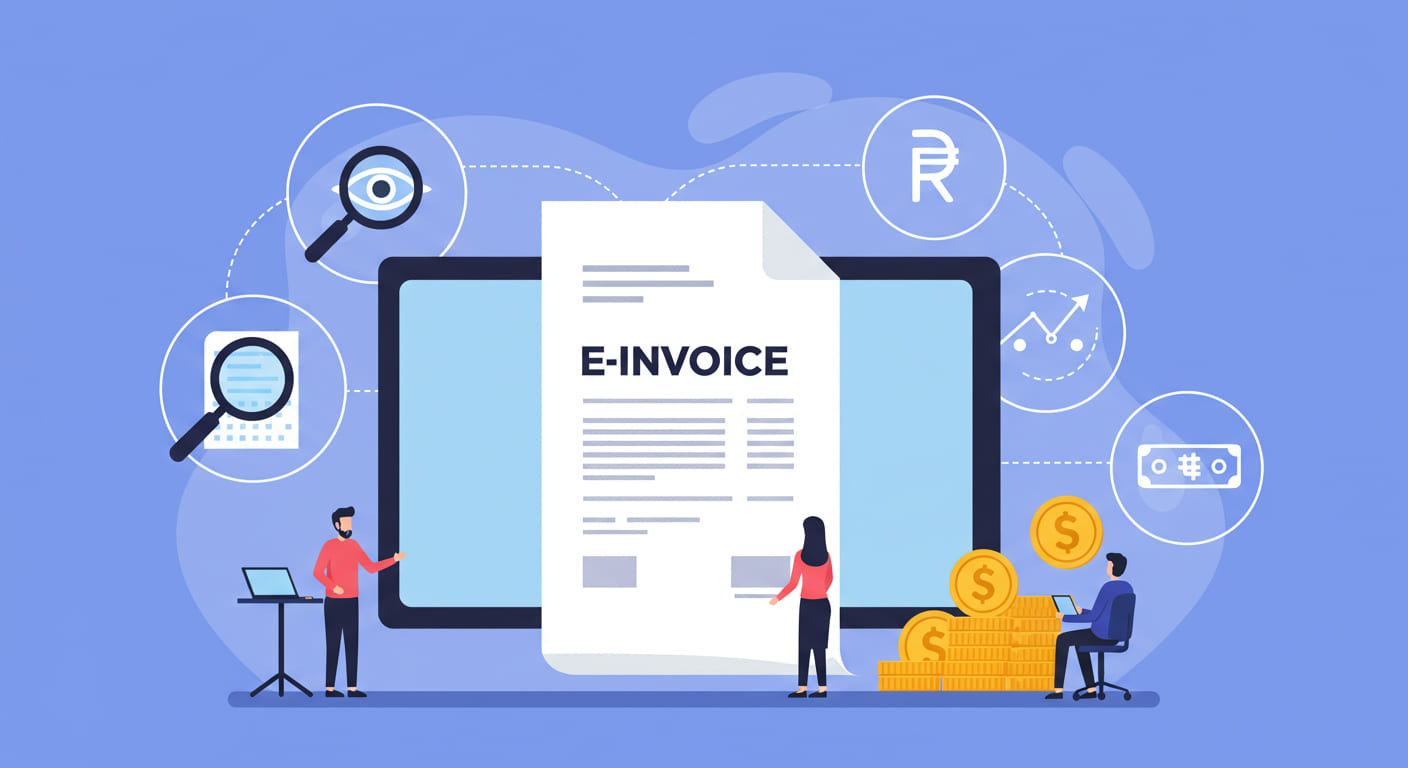
Empower your business growth and financial clarity by adopting electronic invoicing in KSA today. The Kingdom of Saudi Arabia is currently undergoing a sweeping economic and technological renaissance, driven by the ambitious framework of Vision 2030. At the very core of this digital transformation is the push for absolute financial transparency, a goal heavily supported by the Zakat, Tax and Customs Authority’s (ZATCA) electronic invoicing mandate. While many business owners initially view these new government regulations as a burdensome compliance hurdle, forward-thinking executives recognize them for what they truly are: a massive strategic advantage.
Transitioning from traditional paper ledgers and fragmented billing systems to a unified digital infrastructure does more than just satisfy government tax inspectors. It fundamentally modernizes your commercial operations. By embracing this mandate, businesses unlock unprecedented operational excellence, drastically reduce administrative friction, and lay a highly secure, data-driven foundation for sustainable, long-term growth in a rapidly modernizing regional economy.
Defining the Anatomy of an Electronic Invoice in the Kingdom
To leverage the benefits of this system, you must first understand exactly what constitutes a legal electronic invoice within the Saudi market. It is a dangerous misconception to assume that a standard PDF generated by a word processor fulfills the mandate.
Under ZATCA regulations, an electronic invoice is a highly structured, machine-readable digital file. It requires a specific dual-format generation: a human-readable PDF/A-3 document that contains a natively embedded XML code file. This structured format completely replaces traditional paper invoices by ensuring that billing software can instantly communicate with government tax portals without requiring a human to manually read or retype the data.
Furthermore, these digital files must contain strict, mandatory data fields. Every invoice must clearly state the exact Value Added Tax (VAT) registration numbers of both the buyer and the seller, provide a highly specific breakdown of applied taxes, include precise timestamps, and feature a dynamic cryptographic QR code to prove the document’s authenticity.
The Regulatory Framework and Strict Compliance Requirements
Operating legally within the Kingdom means adhering to a strict set of technical and procedural rules. Understanding the ZATCA mandate system in Saudi Arabia is essential for avoiding severe business disruptions.
- Rigorous Technical Standards: Your billing software must generate the correct XML schema, apply cryptographic stamps to prevent data tampering, and utilize Public Key Infrastructure (PKI) digital signatures to guarantee the identity of the invoice issuer.
- The Phased Implementation Model: The rollout is divided into two distinct eras. Phase 1 (Generation) simply required businesses to issue and store digital invoices. We are now deep into Phase 2 (Integration), which mandates a real-time “Clearance” model for B2B transactions, requiring invoices to be validated by ZATCA before they are issued to the buyer.
- Live API Integration: To achieve Phase 2 compliance, your billing system must maintain a constant, secure Application Programming Interface (API) connection directly to the national Fatoora portal.
- Long-Term Digital Archiving: Businesses are legally required to securely store these electronic invoices, along with their unalterable digital audit trails, for a minimum of seven years.
- The Cost of Non-Compliance: The regulatory net is tightening. As consecutive implementation waves roll out, businesses failing to achieve full integration will face escalating financial penalties and operational restrictions starting in 2026.
Accelerating Business Growth Through Digital Billing
While the initial motivation for upgrading your systems may be regulatory survival, the actual outcome is a massive boost to your daily operational capabilities. Implementing robust electronic invoice architecture directly supports aggressive business growth.
Dramatically Faster Cash Flow
Paper invoices get lost in the mail, sit on desks, and delay the entire payment cycle. Electronic invoicing allows for instant delivery directly into your client’s payable systems. Coupled with automated payment reminders, this drastically reduces your Days Sales Outstanding (DSO), injecting necessary cash back into your business much faster.
Real-Time Tracking and Financial Accuracy
Digital systems eliminate the “black hole” of traditional billing. You can track the exact status of an invoice in real-time—knowing the second it is generated, cleared by ZATCA, and received by the client. Furthermore, by removing manual data entry from the equation, you completely eliminate costly human errors, such as miscalculated tax rates or duplicate billing.
Live Reporting and Audit Readiness
When your invoices are processed digitally and instantly, your financial dashboards reflect reality by the second. Executive teams gain access to live financial insights, allowing for rapid, data-driven strategic decisions. When it is time for a ZATCA inspection, your accounting team does not panic; the flawless digital audit trails make compliance reviews incredibly simple and stress-free.
Critical Considerations for Selecting Your Software Partner
Choosing the right technological infrastructure is a decision that will impact your business for the next decade. Do not settle for basic solutions that will struggle to scale. When evaluating your options, ensure you review a comprehensive ZATCA e-invoicing Phase 2 checklist KSA and prioritize the following capabilities:
- Certified Phase 2 Clearance: The system must natively support real-time cryptographic stamping and direct API connectivity to the Fatoora portal.
- Deep ERP and POS Integration: Your invoicing tool should not exist in isolation. It must communicate flawlessly with your existing Point-of-Sale (POS) terminals, inventory management systems, and overarching Enterprise Resource Planning (ERP) software.
- Bilingual Support: The platform must navigate the complexities of generating structured XML data while producing human-readable PDF invoices seamlessly in both Arabic and English to accommodate the diverse Saudi business landscape.
- Multi-Branch Scalability: As your business grows, the software must easily deploy across new branches without requiring entirely new server installations, maintaining centralized control from your head office.
- Mobile Accessibility: For field sales teams and mobile distributors, the ability to generate fully compliant, ZATCA-cleared invoices directly from a smartphone or tablet is a massive operational advantage.
Measuring Success: Real-World Transformations in KSA
The theoretical benefits of digital billing translate into massive, measurable gains in the real world. Businesses across various sectors in Saudi Arabia are already reaping the rewards of their digital transitions:
|
Industry Sector |
The Pre-Digital Challenge |
The Post-Implementation Result |
|
Retail Chains |
Plagued by missing receipts, mismatched end-of-day drawer counts, and customer disputes over handwritten bills. |
Achieved a 40% faster end-of-day reconciliation process, eliminated calculation errors, and drastically reduced customer disputes through instantaneous digital receipts. |
|
Manufacturing |
Struggled to track complex, multi-stage supplier payments, leading to delayed raw material shipments. |
Gained real-time visibility into the entire supply chain, ensuring on-time payments, stronger vendor relationships, and uninterrupted production lines. |
|
B2B Services |
Suffered from dangerously high DSO due to clients claiming they “never received the invoice” in the mail. |
Automated the entire client billing cycle, resulting in verifiable invoice delivery and a massive, immediate improvement in monthly cash flow. |
Securing Your Competitive Edge with Daysum
Navigating the technical complexities of Phase 2 integration, XML schemas, and cryptographic security is a daunting task for any commercial enterprise. You need a partner whose primary focus is ensuring your absolute compliance and operational efficiency.
Daysum provides a deeply localized, highly sophisticated ecosystem built specifically to conquer the challenges of ZATCA Phase 2 e-invoicing Saudi Arabia. Our solution offers guaranteed, out-of-the-box Fatoora integration, ensuring every transaction is instantly cleared and legally compliant. Daysum does not force you to abandon your current workflows; our system provides seamless connectivity, acting as the intelligent bridge between your existing ERP software and the government’s tax portals. Backed by deep expertise in the Saudi market and highly responsive local support teams, we ensure your business never misses a beat.
The Inevitable Future of Commerce
Electronic invoicing is no longer an upcoming trend or a futuristic concept; it is the absolute foundation of transparency and growth in the modern Saudi economy. Viewing this mandate merely as a regulatory chore blinds you to the massive strategic advantages it offers. By digitizing your financial workflows, you eliminate friction, accelerate your cash flow, and build a highly resilient, data-driven enterprise capable of scaling rapidly.
Do not wait for the looming deadlines and financial penalties to force your hand. Seize the opportunity to upgrade your operations today. Partner with Daysum to execute a seamless transition, protect your financial integrity, and secure your competitive advantage in the Kingdom’s thriving digital marketplace.
Frequently Asked Questions (FAQs)
No. For Phase 2 (Integration), manual uploads are not permitted for B2B transactions. The ZATCA clearance model requires your accounting software to communicate directly with the Fatoora portal via an API to validate and cryptographically stamp the invoice before you can legally issue it to your buyer.
By eliminating the physical printing and mailing process, the invoice reaches the client's accounts payable department instantly. Furthermore, modern e-invoicing systems can send automated, polite digital reminders as the due date approaches, prompting faster action from the client and drastically shrinking the payment window.
When partnering with a reputable, cloud-based provider like Daysum, your data security is actually significantly increased. E-invoicing utilizes bank-grade encryption, secure APIs, and cryptographic stamps that make the invoices virtually impossible to alter or intercept maliciously, unlike paper invoices sitting in unlocked filing cabinets.
The XML file is the raw, structured code that ZATCA's computers read to validate the tax amounts and seller identities instantly. The PDF/A-3 is simply a visual, human-readable format of that exact same data so you and your client can read the bill. ZATCA requires the XML code to be securely embedded inside the PDF file.
Yes. A company uses its primary VAT Registration Number for the entire enterprise. However, each specific branch, and even each individual Point-of-Sale (POS) terminal within that branch, must generate unique cryptographic keys and Universally Unique Identifiers (UUIDs) to ensure ZATCA can track exactly which terminal generated which invoice.